Wilderness Protector – Neural Networks
Deep learning relies on various network models, each playing a crucial role. In a previous post, we explored Feed Forward networks. Now, we’ll take a closer look at Convolutional Neural Networks, Recurrent Neural Networks, Generative Adversarial Networks, and Natural Language Processing.
To illustrate these concepts, let’s draw inspiration from the behavior and characteristics of alpine mountain dogs.
html-css-js
<!DOCTYPE html>
<html lang="en">
<head>
    <meta charset="UTF-8">
    <meta name="viewport" content="width=device-width, initial-scale=1.0">
    <title>Mountain Dog Care</title>
    <style>
        body {
            font-family: Arial, sans-serif;
            text-align: center;
            background-color: #f4f4f4;
        }
#Want access? Check out Yun.Bun I.O.
CNN (Convolutional Neural Networks):
Primarily used for image recognition and processing pixel data. It’s widely applied in medical imaging, object detection, and facial recognition.
CNNs are highly effective at processing spatial data, particularly images. They use layers of convolutional filters to extract features such as edges, textures, and shapes.
Bernese / Tibetan Mastiff says –
Just as a CNN distinguishes us from other mountain dog breeds by analyzing our coat color, size, and facial structure, our own eyes instinctively process these attributes. We possess distinctive physical traits perfectly suited for harsh climates—thick fur, a strong build, and keen eyes.
How it comes out – *starts barking*
RNN (Recurrent Neural Networks):
Designed for sequential data processing, making it useful for speech recognition, language translation, and time-series forecasting.
Unlike CNNs, RNNs specialize in handling sequential data by maintaining memory of previous inputs.
Great Pyrenees says –
RNNs excel at handling sequential data, much like us mountain dogs, who rely on memory and instinct to navigate rugged terrains. Our pathfinding intelligence allows us to recall familiar trails and adapt to changes in elevation. Just as an RNN processes previous inputs to predict future patterns—whether in speech or time-series forecasting—we refine our movements and improve our navigation through experience.
How it comes out – *starts tilting their head, side-to-side*
GAN (Generative Adversarial Networks):
A model that generates realistic synthetic data, often used for image enhancement, deepfake creation, and data augmentation.
GANs consist of two competing networks: a generator (creates synthetic data) and a discriminator (distinguishes between real and fake data).
Caucasian Shepherd says –
GANs generate realistic synthetic data by learning from real-world patterns, much like how mountain dogs have evolved over centuries—adapting to altitude, cold temperatures, and human companionship. This mirrors the dynamic between a GAN’s generator and discriminator, where the generator continuously refines outputs to create lifelike data. Just as GANs enhance artificial intelligence models, mountain dogs refine their physical traits and survival skills through selective breeding and environmental adaptation.
How it comes out – *zoomies kick in*

Recent trip @Swiss Alps
NPL (Natural Language Processing):
Focuses on understanding and generating human language, enabling applications like chatbots, text summarization, and sentiment analysis.
NLP enables computers to understand and generate human language, impacting various industries.
Saint Bernard says –
Many mountain dogs, like us, serve as rescue dogs, trained to understand human commands and emotions. NLP, which specializes in processing human language, mirrors how we interpret vocal tones, gestures, and environmental cues. Whether guiding lost travelers or responding to handlers, we demonstrate a strong comprehension of instructions and emotional signals—much like NLP models translating speech into meaningful actions.
How it comes out – *shows a trick*
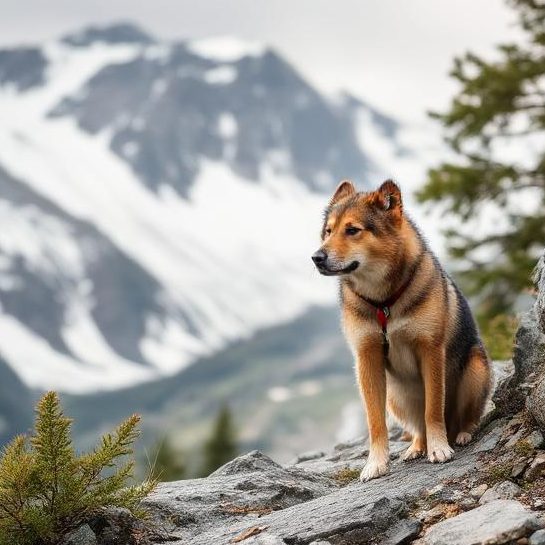
Say hi to one today! Visit Yun.Bun I.O.
2 responses to “2”
-
I love how you explained such complex ideas with the help of mountain dogs! It made it so much easier for me to understand.
LikeLike
-
Your creative analogy between deep learning models and mountain dogs is both insightful and engaging! It made complex AI concepts feel much more approachable and memorable—thank you for the fresh perspective!
LikeLike


 Yun.Bun
Leave a reply to Kimberley A. Cancel reply